Two Pilots Saw It. One Man Was Only Told.
Two Navy pilots described what they had seen. A former intelligence officer described what he had been told. The difference between those two things has defined everything since.
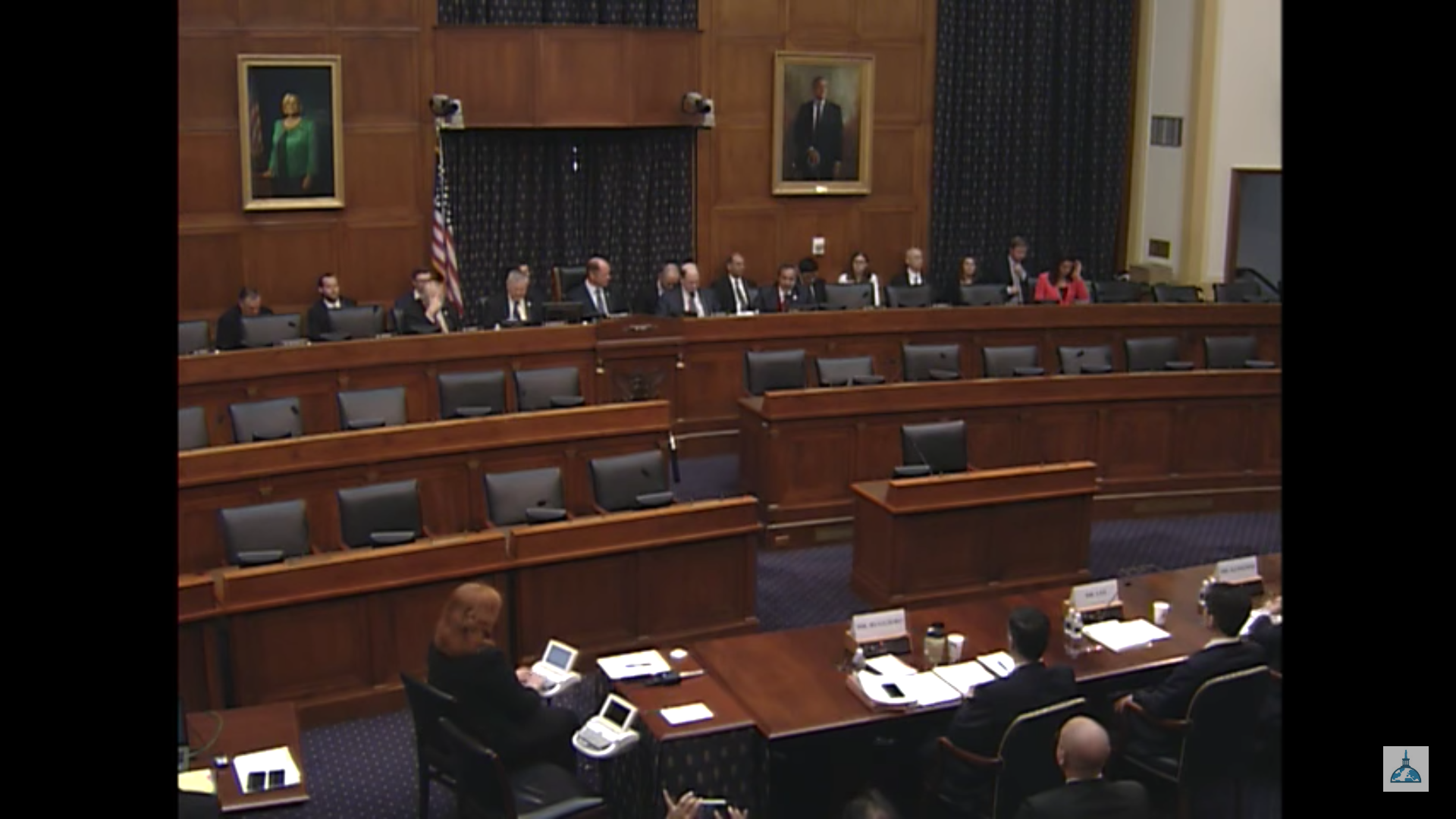
On July 26, 2023, a House Oversight subcommittee took sworn testimony from three witnesses on unidentified anomalous phenomena. It became the most-watched congressional hearing the subject has ever produced. 56
Two of the witnesses described things they had personally seen.
Retired Navy Commander David Fravor recounted the 2004 encounter off Southern California — the small white object shaped like a Tic Tac, moving abruptly over roiling water like a ping-pong ball. 1 Former Navy pilot Ryan Graves described observing dark cubes inside clear spheres in restricted airspace, across an eight-year span. 1
The third witness described something he had been told.
The distinction that got lost
David Grusch, a former National Geospatial-Intelligence Agency officer who had served as the National Reconnaissance Office's representative to the UAP Task Force, alleged a concealed, decades-long crash-retrieval and reverse-engineering program, and the recovery of what he termed non-human biologics. 12 He said specifics required a classified setting. 1
Grusch was consistent and careful about his own position: he was reporting what colleagues had told him and what he had reviewed, not what he had personally handled. That distinction is critical, and it evaporated in most of the coverage. 3
Fravor and Graves gave firsthand testimony about objects. Grusch gave secondhand testimony about a program. Both are legitimate categories of evidence. They are not the same category, and treating them as one has distorted this story for three years.
The reckoning
The immediate verdict from people outside the room was deflationary. PBS's analysis concluded the testimony had not changed the basic understanding of UFOs — no imagery was produced, no program was confirmed, and the extraordinary claims rested on the credibility of a single witness. 7 The Department of Defense said it had found no verifiable information substantiating the allegations. 4
Scientific American drew the more durable lesson: whatever the truth of Grusch's claims, the hearing demonstrated that the oversight machinery around this subject was not functioning, and that the fix is structural rather than sensational. 8
That is what actually followed. Within a year Congress was writing records-preservation law, whistleblower protections and subpoena threats. 9 The hearing did not prove anything about craft. It proved the process was broken, and the process is what has been under construction ever since.
SOURCES
This report was written by UFONN from the reporting and primary documents below. Numbers in the text correspond to this list. Every link goes to the original publisher.
- 1UFO hearing key takeaways: What a whistleblower told Congress about UAPsCBS News
- 2Whistleblower testifies U.S. salvaged material from UFO crash sitesNPR
- 3Key takeaways from the US congressional hearing on UFOsAl Jazeera
- 4Congressional UAP hearing features David Grusch whistleblower claimsABC11
- 5House Oversight Committee UAP HearingUAP Ledger
- 6National Security Subcommittee to Hold Hearing on Unidentified Anomalous PhenomenaHouse Oversight
- 7Analysis: Whistleblower testimonies did not change our basic understanding of UFOsPBS NewsHour
- 8Congressional UFO Hearing Shows Need for More TransparencyScientific American
- 9Close encounters with UFOs described to Congressional committeeGulf News